
Continuous Heart Monitoring Made Simple
ECG247 is a Norwegian medically certified solution for continuous long-term heart rhythm monitoring. The system combines a wearable ECG sensor, mobile application and secure web-based access for healthcare-supported monitoring workflows.
Why Continuous ECG Monitoring Matters
Heart rhythm disturbances can occur intermittently and may not always be detected during short monitoring periods or standard clinical assessments. Longer-term ECG monitoring can therefore play an important role in evaluating symptoms such as palpitations, dizziness and suspected atrial fibrillation.
ECG247 is designed to support patient-friendly long-term monitoring workflows, enabling continuous ECG recording with secure access to monitoring data for healthcare professionals.
A Growing Need for Earlier Rhythm Assessment
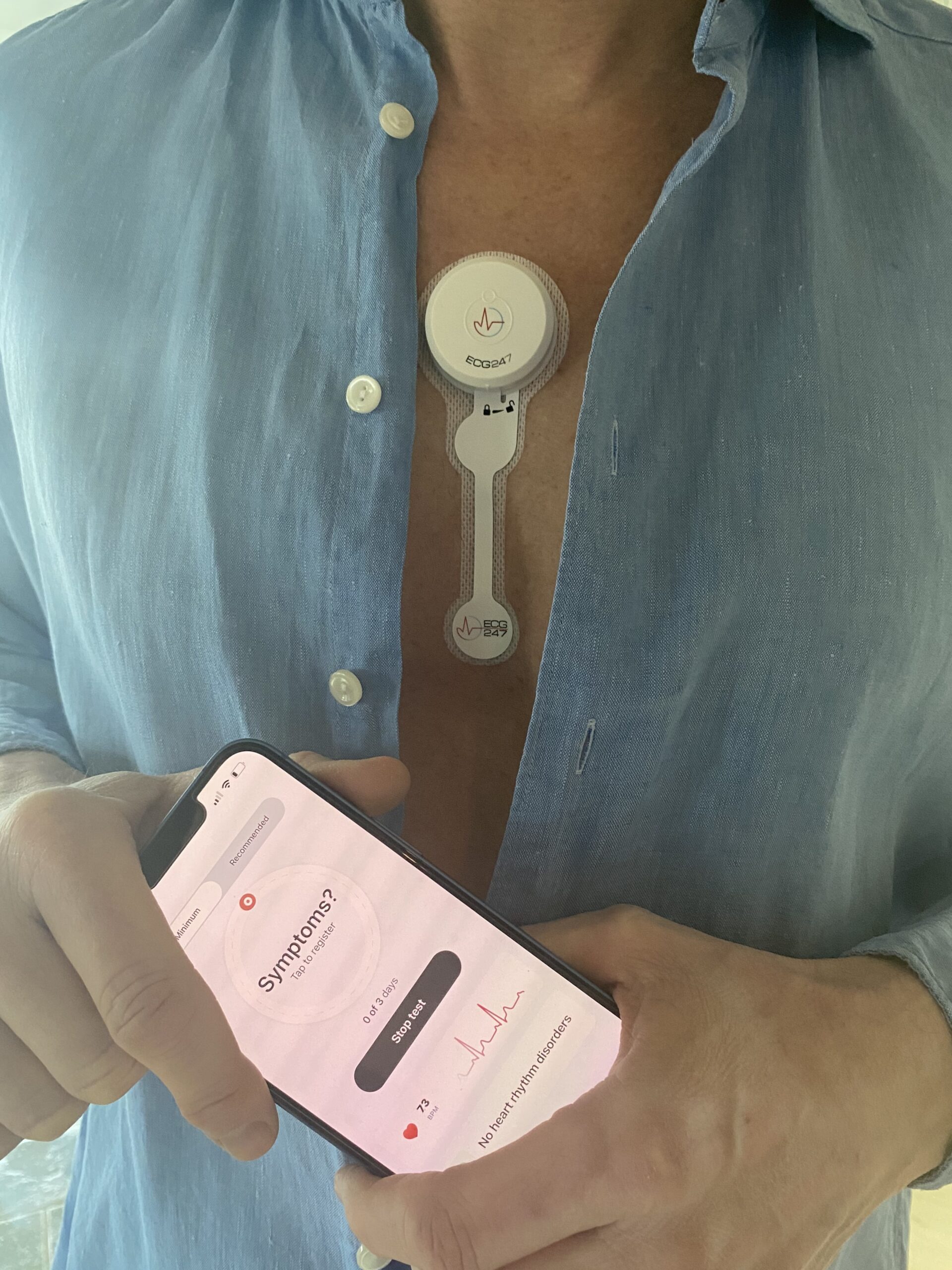
Atrial fibrillation (AF) is one of the most common heart rhythm disorders and represents a growing challenge for healthcare systems. Because AF can be intermittent or asymptomatic, it may remain undetected during short clinical assessments.
Denmark
The prevalence of atrial fibrillation in Denmark is estimated at around 3% of the population.
Finland
Nationwide Finnish data has reported atrial fibrillation prevalence at approximately 4% of the total population.
Lifetime Risk
Nordic research indicates that the lifetime risk of atrial fibrillation may approach one in three individuals.
Ageing Population
As populations age, the need for scalable and patient-friendly rhythm assessment is expected to become increasingly important.
Long-term ECG monitoring can support earlier detection of intermittent rhythm disturbances and help healthcare professionals evaluate symptoms such as palpitations, dizziness and suspected atrial fibrillation.
Challenges in Detecting Intermittent Heart Rhythm Disturbances
Heart rhythm disturbances may occur irregularly and may not be present during a short clinical assessment. This can make detection challenging, particularly when symptoms are intermittent, unclear or occur outside the healthcare setting.
Symptoms such as palpitations, dizziness, irregular pulse or unexplained discomfort may appear and disappear over time. In these situations, a short ECG recording may not capture the rhythm disturbance, even when the symptoms are clinically relevant.
Longer monitoring periods can provide a broader view of heart rhythm activity and support healthcare professionals in evaluating intermittent episodes more effectively.
Patient-friendly monitoring workflows can also support care outside traditional clinical environments, making rhythm assessment more accessible across home-based, remote and distributed healthcare settings.
Intermittent Symptoms
Symptoms may occur irregularly and may not be present during a scheduled consultation or short ECG recording.
Short Recording Limitations
Short monitoring periods may miss rhythm disturbances that occur outside the recording window.
Home-Based Monitoring
Long-term monitoring can support rhythm assessment in everyday settings, outside the traditional clinic environment.
Clinical Review
Recorded ECG data can support healthcare professionals when reviewing symptoms and assessing possible rhythm disturbances.
What ECG247 Consists Of
ECG247 combines a reusable ECG sensor, a patient-guided mobile application and secure web-based access for long-term heart rhythm monitoring.
Reusable ECG Sensor
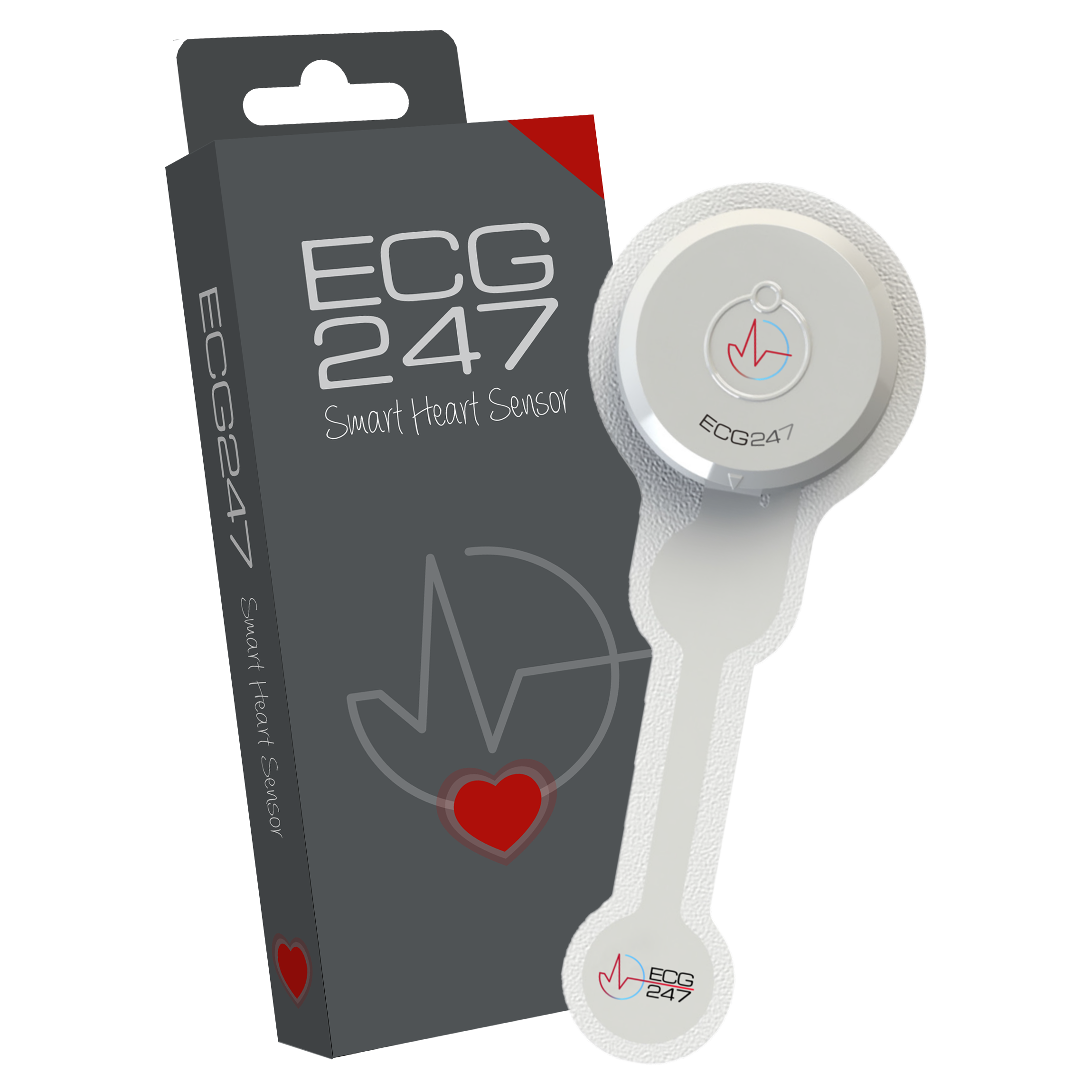
The ECG247 sensor is designed for continuous long-term ECG recording in everyday settings, supported by a disposable electrode patch.
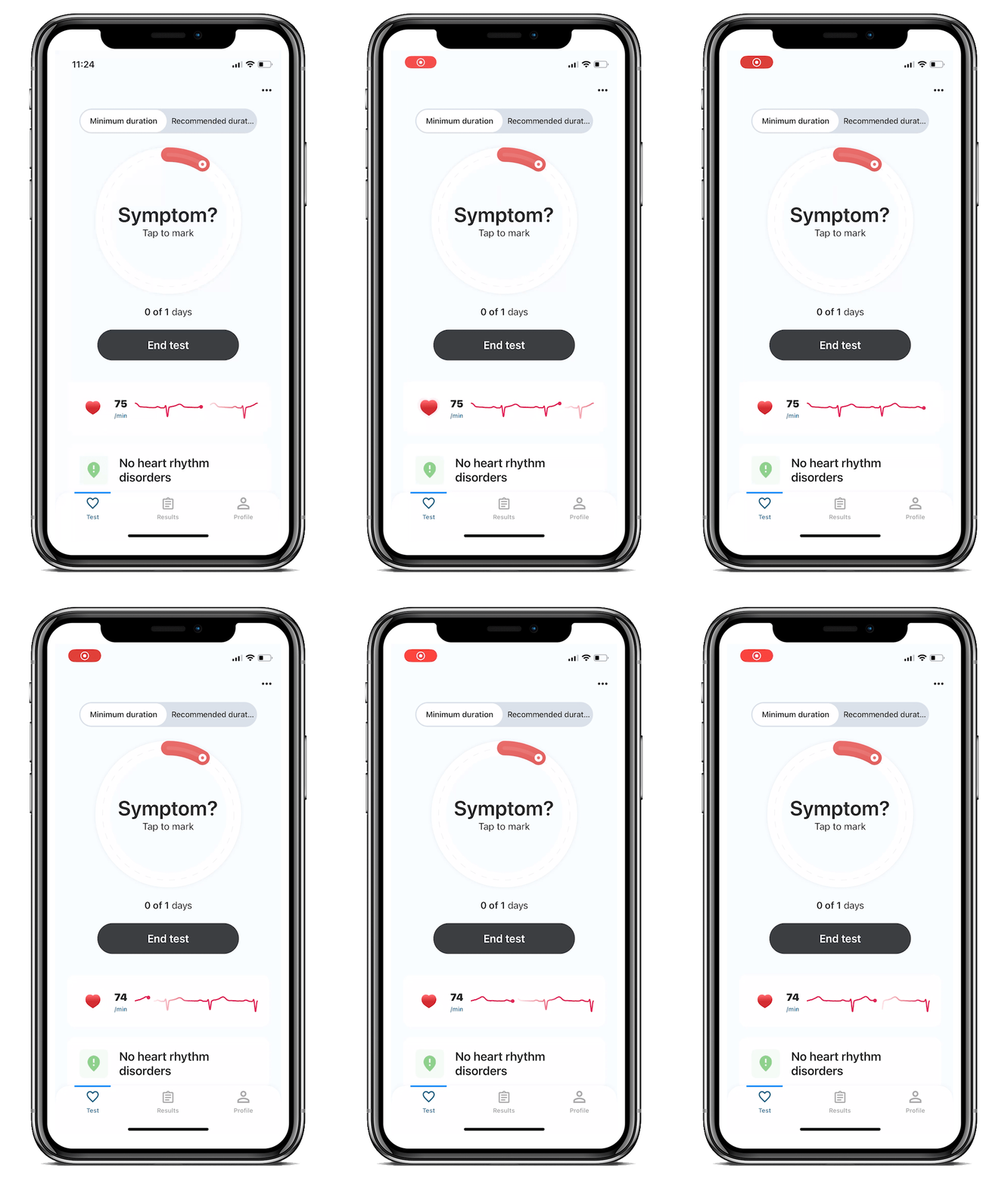
Patient-Guided Mobile App
The ECG247 app guides the user through setup, sensor placement and the monitoring process step by step.
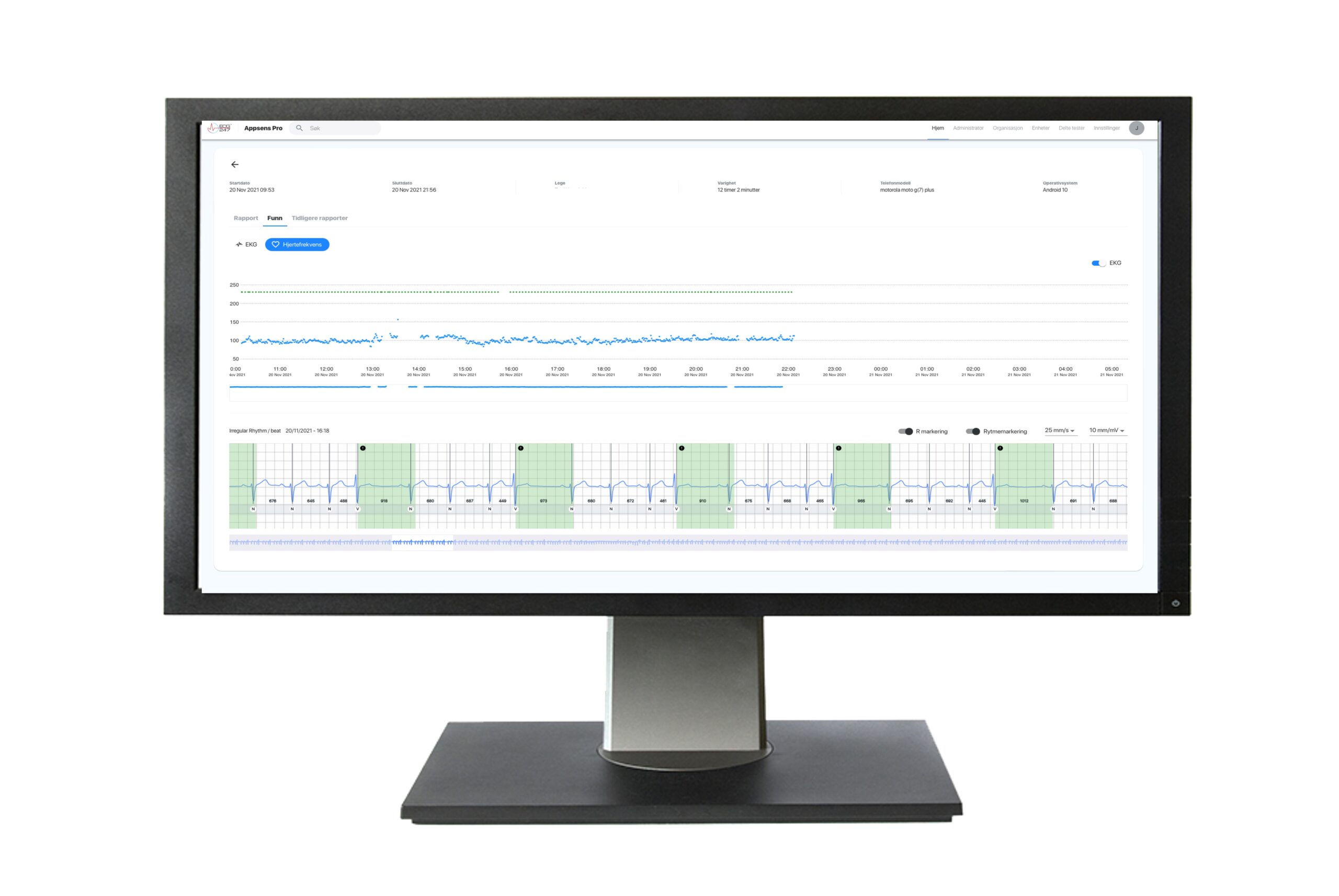
Secure Web Portal
Monitoring data can be accessed through the ECG247 portal for review by healthcare professionals.
How ECG247 Works
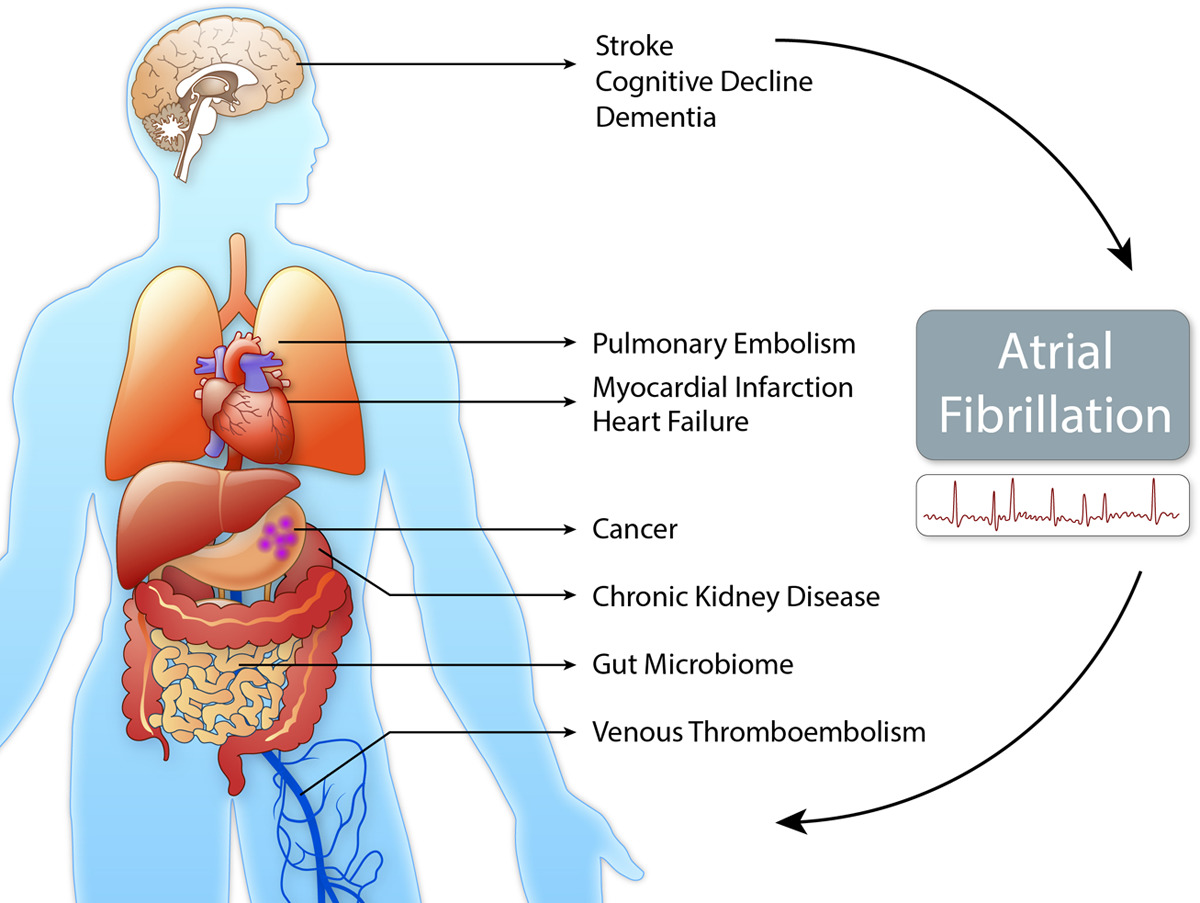
ECG247 supports long-term heart rhythm monitoring through a reusable ECG sensor, a disposable electrode patch, the ECG247 app and secure web-based access to monitoring data. The app guides the user step by step through setup, recording and completion of the monitoring period.
ECG247 Video Walkthrough
Watch the short introduction to see how the sensor, app and guided setup support the ECG247 monitoring workflow.
Step-by-step Monitoring Workflow
Download the App
Download the ECG247 app to a compatible mobile phone to begin the guided setup.
Follow the Guided Setup
Open the app and follow the step-by-step instructions for preparing the monitoring session.
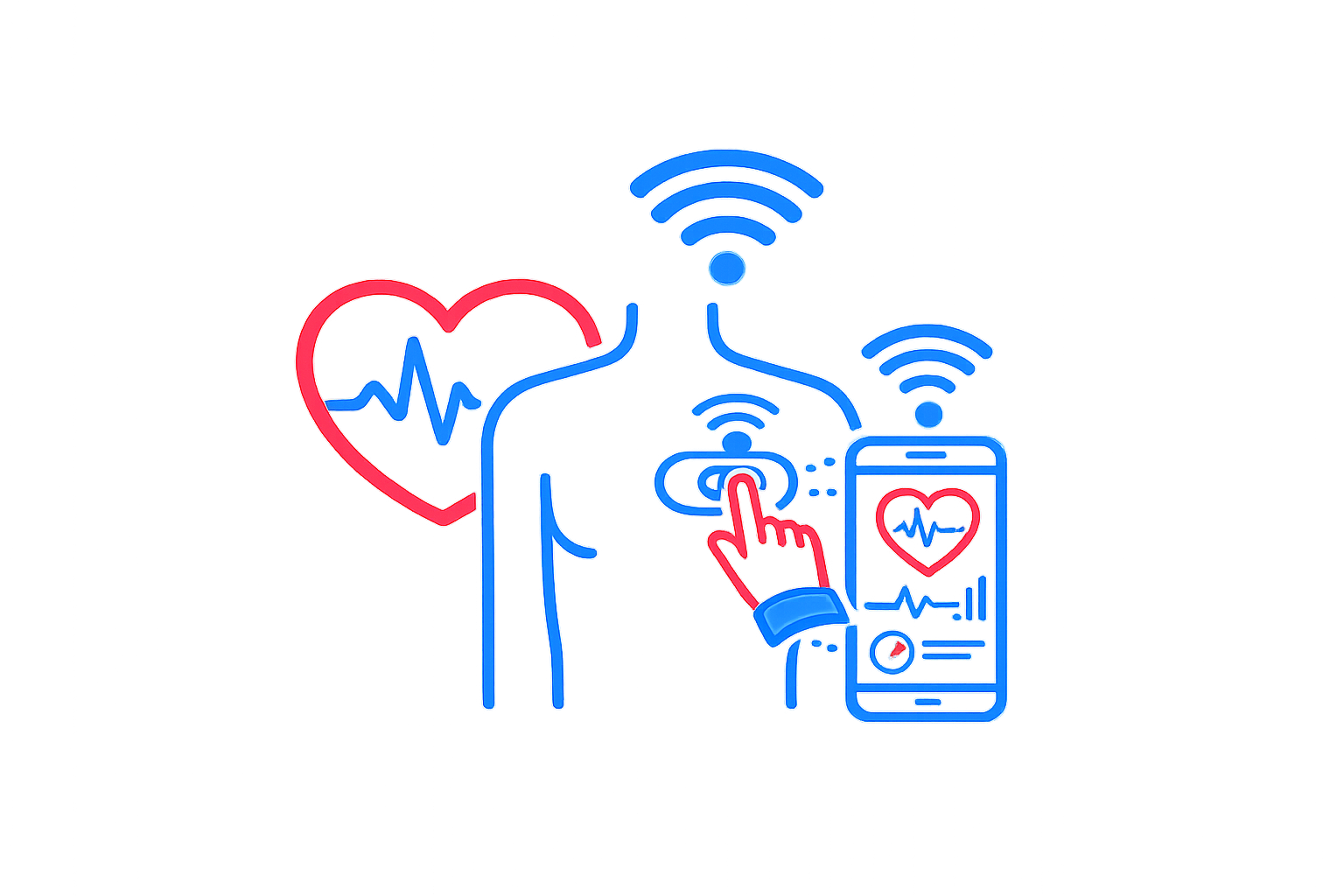
Apply Sensor and Start Recording
Attach the ECG sensor to the electrode patch and place it on the chest as instructed. The app guides the user during continuous heart rhythm recording.
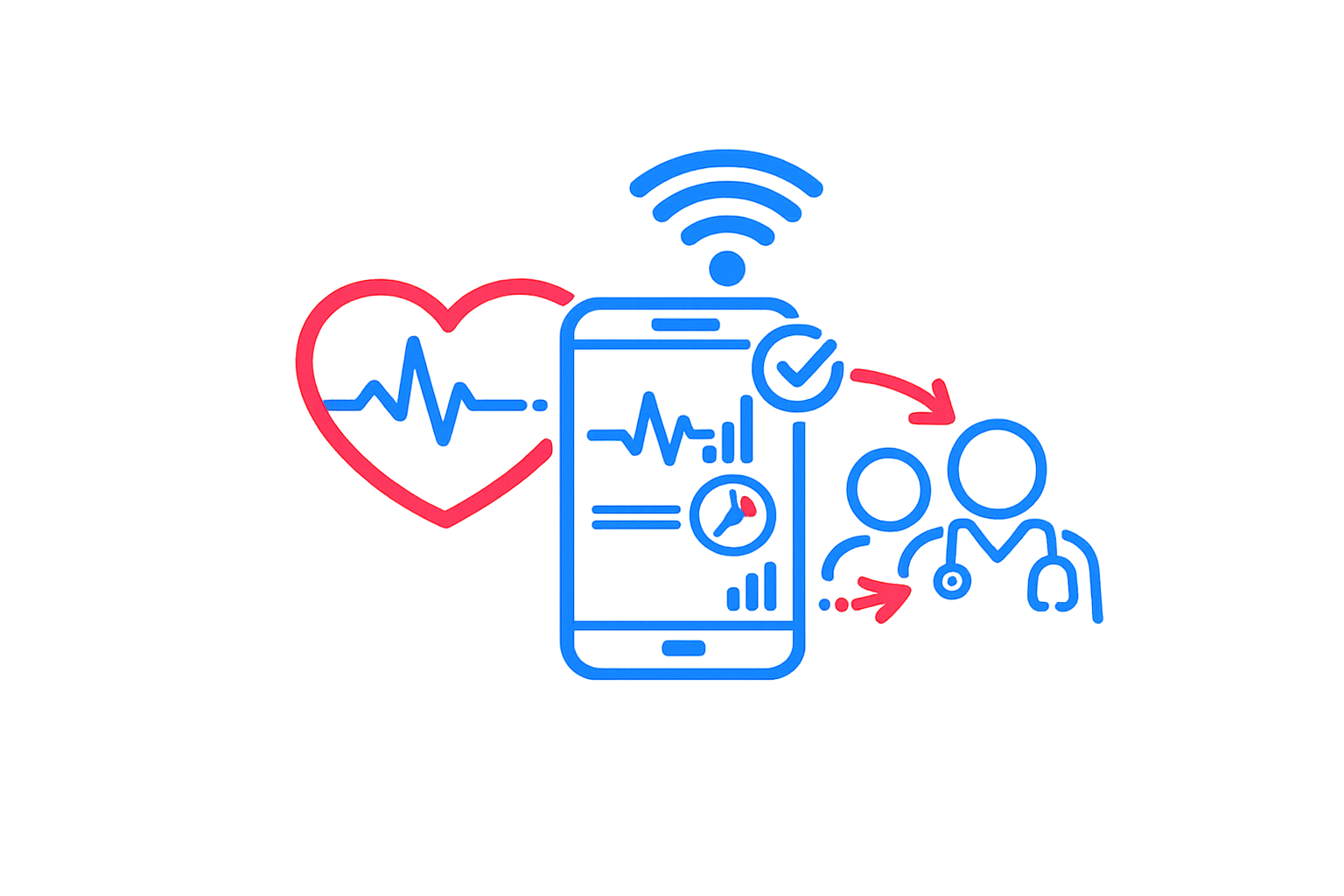
Complete and Review
Once the monitoring period is complete, recorded data can be reviewed and shared with a healthcare professional where relevant.
App and User Guide Resources
Download the ECG247 app for your device or access the quick user guide for setup, sensor placement and monitoring instructions.
Google Play
Download the ECG247 app for compatible Android devices and follow the guided setup in the app.
Download on Google Play
App Store
Download the ECG247 app for compatible iPhone devices and follow the guided setup directly in the app.
Download on the App Store
Quick User Guide
Download the quick user guide with instructions for setup, sensor placement and use.
Download User GuideClinical Workflows and Use Cases
ECG247 can support long-term heart rhythm monitoring across healthcare-supported, remote and home-based workflows. It is relevant when symptoms are intermittent, when atrial fibrillation is suspected, or when longer rhythm assessment may support clinical review.
Atrial Fibrillation Assessment
Long-term ECG monitoring can support assessment when atrial fibrillation is suspected or when rhythm irregularities require further evaluation.
Palpitations and Intermittent Symptoms
ECG247 can support monitoring in individuals experiencing palpitations, irregular pulse, dizziness or symptoms that occur intermittently.
Home-Based Monitoring
The patient-guided app and wearable sensor support long-term rhythm monitoring outside traditional clinical environments.
Remote Follow-Up Workflows
Secure web-based access to monitoring data can support healthcare professionals in remote follow-up and distributed care models.
Designed for Modern Monitoring Pathways
ECG247 is designed to support flexible long-term ECG monitoring workflows across healthcare, remote follow-up and home-based assessment models.
Clinical and Remote Monitoring
CG247 supports long-term rhythm monitoring workflows where healthcare professionals can review ECG data through secure portal-based access.
Patient-Guided Monitoring
The ECG247 app guides the user through setup, sensor placement and the monitoring process in a structured and accessible workflow.
ECG247 in Denmark and Finland
Stevn Technologies AB supports the distribution and implementation of ECG247 across Denmark and Finland in collaboration with AppSens AS, Norway.
Relevant healthcare segments include hospitals, hospital-at-home programmes, elderly care, rehabilitation, home care and remote monitoring initiatives.
Discuss ECG247 Monitoring Solutions
For information about ECG247, implementation models or monitoring workflows, please contact Stevn Technologies.